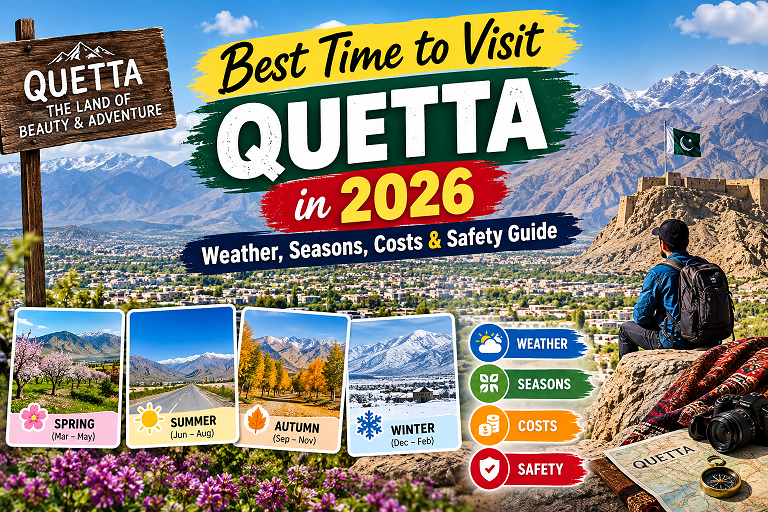
For most visitors, the best time to visit Quetta is during April to mid-May or late September through October. These shoulder seasons generally avoid the coldest winter nights and hottest summer afternoons. Choose winter only if cold weather or a possible snowfall is your main purpose, and understand that snow is never guaranteed. Before any trip, check the Pakistan Meteorological Department forecast, road conditions, transport status, local authority instructions and the latest security advice for your nationality.
Quetta sits at high elevation in a broad valley, giving it a drier continental climate and larger seasonal temperature changes than many Pakistani cities. Spring can be green and pleasant, summer days can become hot while evenings are comparatively cooler, autumn often offers clear skies and seasonal produce, and winter can bring freezing nights, rain and occasional snow.
This guide helps readers choose dates according to weather, budget, crowds and activities. It does not promise safe travel, snowfall, clear roads, flight operation or fixed hotel prices. Shalkot.com is an independent information website—not a tour operator, hotel, airline, transport company or government authority.
April–mid-May and late September–October.
Winter offers a possibility, never a guarantee.
Late summer and autumn vary by crop and district.
Forecast, road, transport and security conditions.
Important security notice: As of the fact-check date, several foreign governments advise against travel to Balochistan because of terrorism and kidnapping risks. Conditions and advice can change. International travelers must read their own government’s current advisory; all travelers should follow Pakistani authorities, local administration and transport/security instructions. Pleasant weather does not make a journey safe.
Best months to visit Quetta at a glance
| Travel period | General conditions | Best for | Main caution |
|---|---|---|---|
| April to mid-May | Mild to increasingly warm days; cool evenings; possible spring rain or thunderstorms | City sightseeing, markets, gardens and day trips | Check short-term rain, wind and road forecasts. |
| Late September to October | Warm-to-mild days, cooler nights and often clearer weather | Food, markets, photography and comfortable walking | Large day/night temperature difference. |
| November | Cooling quickly; winter conditions begin | Travelers comfortable with cold and fewer weather extremes than midwinter | Cold nights and possible western weather systems. |
| December to February | Cold days, freezing nights, rain and possible snow | Winter atmosphere and possible snowfall | Heating, road closures, delays and black ice. |
| June to August | Hot afternoons; generally drier feel, but severe rain events are still possible | Necessary visits, early-morning activities and cooler evenings | Heat, sun exposure and unpredictable intense rainfall. |
| March | Transition from winter; cool with rain, wind, hail or occasional late snow possible | Flexible travelers watching the forecast | One of the more changeable periods. |
No calendar can replace a forecast. Historical averages describe typical climate, while the actual trip may include an unusual cold wave, heat, dust, thunderstorm or heavy rain. Check official warnings in the final week and again on the day of departure.
Quetta weather and travel by season
Spring: March to May
Spring is a transition rather than one consistent block. March can remain cold and unsettled, with western weather systems producing rain, hail, strong wind and occasional snow at higher elevations or in the city. April usually becomes more comfortable, although thunderstorms remain possible. By May, afternoons turn warmer and sun protection matters.
For a first leisure visit, April to mid-May is the stronger spring window. It suits city markets, outdoor meals, cultural sightseeing and short daylight excursions. Carry layers rather than one heavy coat because morning, afternoon and evening can feel very different.
Summer: June to August
Quetta is often cooler at night than lower-elevation Pakistani cities, but it is misleading to describe the entire summer as cool. June and July afternoons can be hot, sunlight is strong and low humidity can hide dehydration. Plan walks early or later in the day, use sun protection and drink safe water.
Although Quetta does not experience a typical sustained monsoon like some eastern parts of Pakistan, summer rain can still be severe. Historical events show that heavy rainfall and flooding can disrupt roads and services. Never interpret “dry climate” as “no flood risk.”
Autumn: September to November
Late September and October are excellent for visitors seeking more settled conditions, markets and seasonal food. Days become milder while nights cool. Autumn also connects naturally with fruit harvest and dry-fruit trading, though exact timing differs by crop, altitude and district.
November marks a rapid movement toward winter. It can work for travelers who prefer cold weather, but heating and warm layers become important. The shorter daylight window should be considered when planning road travel.
Winter: December to February
Quetta winter is genuinely cold, not simply pleasant Pakistani winter weather. Night temperatures can fall below freezing, and western disturbances may bring rain or snowfall. Buildings, vehicles and water systems can be affected by cold. Travelers should confirm reliable heating rather than assuming every room is adequately heated.
Snowfall makes attractive photographs, but scheduling a non-refundable trip around a guessed snow date is risky. Even when snow is forecast, intensity and accumulation can change. Snow and ice can delay flights, buses and private vehicles and may close roads toward surrounding destinations.
Month-by-month Quetta travel planner
| Month | What to expect | Travel verdict |
|---|---|---|
| January | Usually the coldest period; freezing nights and snowfall possible. | Only for well-prepared winter travelers with flexible plans. |
| February | Cold with possible rain or snow; conditions can change quickly. | Pack full winter protection and expect transport disruption. |
| March | Cool, windy and changeable; rain, hail and late cold spells possible. | Acceptable with forecast-based planning, not the easiest first visit. |
| April | Milder spring days, cool evenings and occasional thunderstorms. | One of the best months for general sightseeing. |
| May | Pleasant earlier, increasingly hot later; strong sun. | Good, especially early to mid-month. |
| June | Hot and dry-feeling afternoons with cooler nights. | Manageable if outdoor activity avoids peak heat. |
| July | Often among the hottest periods; occasional storms may occur. | Not the best comfort window for intensive sightseeing. |
| August | Warm; intense rain and flooding are possible despite low averages. | Check weather and road warnings closely. |
| September | Hotter early, increasingly comfortable later; often clearer skies. | Late September is a strong choice. |
| October | Mild days, cool evenings and commonly dry conditions. | Another leading month for a first visit. |
| November | Cold building through the month; winter systems can return. | Good for cold-tolerant visitors with warm clothing. |
| December | Cold, freezing nights and possible rain or snow. | Winter-specific travel with flexible bookings. |
The table deliberately avoids presenting fixed future temperatures as guaranteed. Use the Pakistan Meteorological Department’s live city forecast and warning pages for the specific dates.
Best time to visit Quetta by activity
City sightseeing and markets
April, early May and October generally offer the most comfortable balance for walking through central markets and visiting local landmarks. Use daylight hours and confirm local conditions. The guide to things to buy from Quetta explains products, market areas and authenticity checks.
Dry-fruit shopping and seasonal foods
Dry fruits are available throughout the year because products are dried, stored and traded, but demand is especially visible in cold weather. Autumn can be attractive for seasonal produce. Check the Quetta dry-fruit market guide and Balochistan dry-fruit guide before comparing origin, crop and price.
Snowfall photography
Winter provides the best chance, but there is no guaranteed “snowfall month” for a bookable trip. Monitor official forecasts, avoid unsafe roads and do not stop a vehicle where it blocks traffic. Mountain viewpoints can be colder and more hazardous than central Quetta.
Orchard blossom and greenery
Spring timing depends on winter cold, elevation and individual fruit varieties. A warm year can advance flowering; a cold spell can delay or damage it. Ask the relevant garden or orchard shortly before visiting rather than relying on an old social-media date.
Fruit harvest and local food
Summer into autumn brings different fruits from surrounding districts. Apples, grapes, apricots, almonds and dates do not share one harvest date. Quetta is the distribution centre, while many crops are grown outside the city.
Day trips outside Quetta
Spring and autumn may provide better weather for trips toward surrounding valleys, but road and security conditions are route-specific. Obtain current local guidance, travel in daylight and avoid treating an old itinerary as current permission or evidence of safety.
Hotels, flights, transport and travel costs
Commercial searches such as cheap hotels in Quetta, Quetta hotel room price, flight tickets to Quetta, car rental in Quetta with driver and Quetta tour package price cannot be answered with one permanent rate. Costs vary by dates, demand, room type, taxes, cancellation terms, route and security arrangements.
How to compare hotel prices
- Compare the same room type, occupancy and meal plan.
- Confirm taxes, service charges and payment currency.
- Ask specifically about heating in winter and cooling in summer.
- Check hot water, generator backup, parking and security procedures.
- Read cancellation and no-show terms before advance payment.
- Verify the property directly; copied booking listings and fake pages exist.
How to compare flights and road transport
Airfare depends on origin, booking date, baggage, flexibility and availability. Compare the final price after baggage and change charges. Flight schedules may change due to operational or weather conditions.
For buses, 2D services, private cars and rentals, verify the operator, vehicle, driver, pickup, route, fare, tolls, luggage, cancellation and final payment. Do not send money based only on a forwarded WhatsApp poster. Use Shalkot’s route-specific guides as information, then confirm with the actual provider.
Budget tip: Shoulder-season travel is not automatically cheaper. Local events, government activity, flight capacity and hotel demand may raise prices. Compare flexible dates before assuming April or October has the lowest rate.
What to pack for Quetta in each season
| Season | Essential clothing | Useful extras |
|---|---|---|
| Spring | Layers, light jacket, comfortable closed shoes | Compact rain layer, sun protection and dust protection |
| Summer | Breathable modest clothing, hat and walking shoes | Sunscreen, refillable water bottle and light evening layer |
| Autumn | Day layers plus warm jacket for evenings | Lip balm, moisturizer and sunglasses |
| Winter | Insulated coat, thermal layers, warm trousers, hat and gloves | Weather-resistant shoes, spare socks and power bank |
Quetta’s dry air can increase thirst and skin dryness. Carry prescribed medicines in original packaging and do not assume every brand will be available locally. For children, older adults and people with heart or lung disease, discuss unusually cold or high-altitude travel with a clinician when appropriate.
Weather, roads, health and security checks
A responsible travel guide must separate climate comfort from overall travel risk. The “best weather month” is not automatically the best time to travel if there are active warnings, road closures, protests, transport suspensions or security operations.
Complete these checks before departure
- Read the Pakistan Meteorological Department forecast and warnings.
- Confirm your flight, bus or car service directly on departure day.
- Check route and road status with relevant authorities and the operator.
- Follow Balochistan government and local administration instructions.
- International travelers should read their own government’s advisory and insurance exclusions.
- Share the itinerary and verified contact details with family.
- Travel in daylight where advised and avoid unplanned remote routes.
- Keep identification, emergency funds, charged phones and essential medicines.
Heavy rain may cause urban flooding, flash floods or road damage. Snow and freezing temperatures can create black ice. Dust and strong wind can reduce visibility. Do not cross moving floodwater or bypass a closure because another vehicle did so.
Travel insurance may exclude destinations subject to an official “do not travel” advisory. Read the wording before purchasing; do not assume the policy is valid simply because payment was accepted.
How many days are enough for Quetta?
A two- or three-day city-focused visit can cover markets, food, selected landmarks and relaxed local travel without rushing. Any trip beyond the city requires separate time, transport, road and security planning.
Simple two-day structure
- Day one: central Quetta, selected historical or cultural places, local food and daylight market shopping.
- Day two: additional city attractions, verified nearby visit if currently permitted, and dry-fruit or handicraft shopping.
Keep the schedule flexible. A delayed flight, weather warning or temporary road issue should lead to a changed plan, not risky rushing. Do not place an important outbound connection immediately after a winter road journey.
Frequently asked questions
What is the best month to visit Quetta?
April and October are generally the strongest choices for comfortable city travel, but check the actual forecast and current local conditions.
When does it snow in Quetta?
Snow is possible during winter, especially when suitable western weather systems arrive, but no month or date guarantees snowfall.
Is Quetta cold in December?
Yes. December can bring cold days, freezing nights and possible rain or snow. Confirm heating and pack proper winter layers.
Is Quetta cool in summer?
Evenings may be cooler than many lower-elevation cities, but summer afternoons can be hot. Avoid describing it as cool all day.
Is April a good time to visit Quetta?
April is usually one of the better months, with milder temperatures. Rain, thunderstorms or late cold spells remain possible.
Is October a good time to visit Quetta?
Yes, October commonly offers mild days and cool evenings, making it suitable for markets and sightseeing.
When is the cheapest time to visit Quetta?
There is no reliable cheapest month. Compare hotel and transport prices across flexible dates because demand and capacity change.
Is it safe to visit Quetta?
Security conditions are dynamic, and several foreign governments currently advise against travel to Balochistan. Check official advice, Pakistani authorities and local conditions immediately before travel.
Does Shalkot arrange Quetta tours or bookings?
No. Shalkot.com is an independent information publisher and does not take hotel, flight, car or tour payments.
Final pre-trip checklist
- Dates selected for the preferred season.
- Live PMD forecast and warnings checked.
- Security advisories and local instructions reviewed.
- Hotel identity, heating/cooling and cancellation verified.
- Flight or road transport reconfirmed.
- Route and road conditions checked.
- Clothing packed for day/night temperature differences.
- Insurance exclusions read.
- Flexible backup plan and family contact arranged.
Related Quetta guides
Sources and verification notes
- Pakistan Meteorological Department—official forecasts, warnings and advisories
- PMD weather portal—check live Quetta conditions before travel
- UK FCDO Pakistan travel advice—Balochistan regional warning checked August 2026
- U.S. Department of State Pakistan travel advisory—Balochistan warning
- Government of Canada Pakistan travel advice—regional advisories