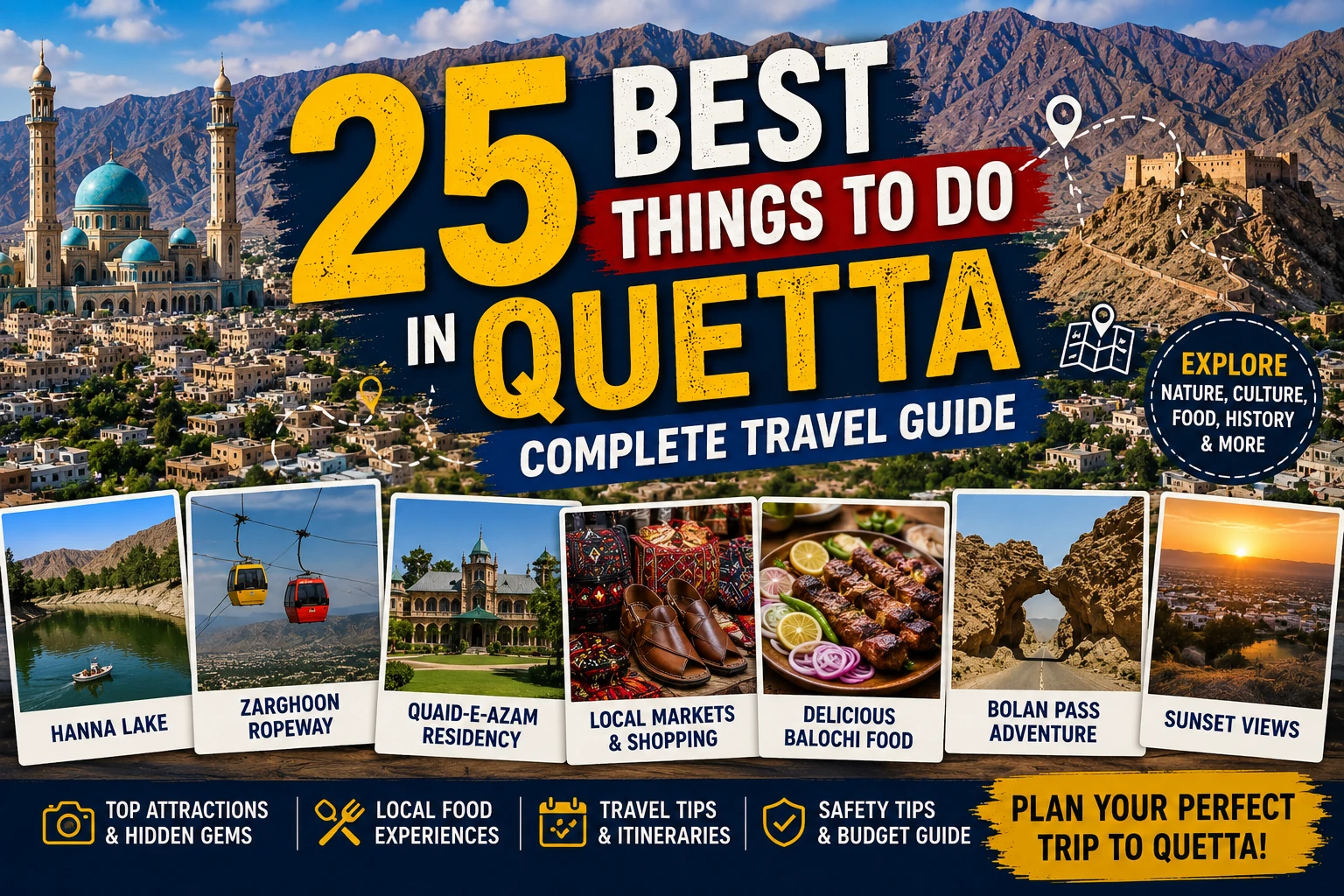
The best things to do in Quetta combine mountain scenery, local food, traditional bazaars and carefully planned excursions. Start with Hanna Lake and the road toward Urak Valley, explore Liaquat and Kandahari bazaars, try sajji and rosh, and consider Hazarganji–Chiltan National Park only after confirming access with local authorities. Conditions, opening hours and security can change, so verify every excursion on the day of travel.
Quetta is not a conventional resort city. Its appeal comes from its high-altitude valley, dry mountain landscape, Pashtun and Baloch cultural influences, fruit markets, winter weather and position as the capital of Balochistan. A rewarding visit is less about rushing through a checklist and more about eating locally, talking respectfully with residents, visiting markets and seeing the landscape with someone who understands current routes.
This independent guide does not operate tours or sell tickets. It explains how to plan a Quetta trip, what to see, what costs to ask about and when a licensed driver or knowledgeable local guide may be worth paying for. Shalkot does not guarantee that an attraction, road, boating service, restaurant or park will be open when you arrive.
Hanna Lake, the Urak road and mountain viewpoints when access and weather permit.
Traditional bazaars, dry-fruit shops and a relaxed local meal.
A private car with a reliable local driver, especially outside the city centre.

Before choosing what to do in Quetta
Build flexibility into the plan. Weather can change quickly, winter snow may affect roads, and local access or security arrangements can change without much notice. Phone a hotel, driver, tour operator or host before leaving for an outlying location. Ask a specific question—“Is the Hanna Lake road open this morning?”—rather than relying on a general social-media post.
Quetta sits at elevation and can feel colder than many Pakistani cities, especially after sunset. Carry layers even on a pleasant day. Summer sunlight is strong and the air is often dry, so water, sun protection and lip balm are useful. Winter visitors should check the Pakistan Meteorological Department forecast and avoid assuming a normal city car is suitable after snow.
Important travel-advisory notice
Several foreign governments currently advise against travel to Balochistan because of terrorism, kidnapping and security risks. International visitors should read their own government’s current advice, confirm insurance validity and obtain local professional guidance before making bookings. Pakistani residents should also follow provincial administration, police and road-authority directions.
Best things to do and places to visit in Quetta
1. Visit Hanna Lake—but check its condition first
Hanna Lake is the most recognized excursion near Quetta. The ochre hills and open sky can make the setting photogenic, particularly in softer morning or late-afternoon light. However, rainfall and drought affect water levels, and boating, food stalls, seating and other facilities should never be assumed to be operating.
Before hiring a taxi or car, ask a recent visitor or your hotel about the current lake condition. Take drinking water and carry out your litter. If the lake is low, the mountain landscape can still be worth seeing, but set expectations honestly—historic photographs may not represent today’s water level.
2. Continue toward Urak Valley when the route is suitable
The road beyond the Hanna area leads toward Urak, known for orchards and a greener seasonal landscape than central Quetta. Fruit blossoms and harvest conditions vary, so there is no fixed week that guarantees a particular view. Spring and the fruit season can be attractive, while winter road conditions require extra caution.
A Quetta car rental with driver is more practical than negotiating several short rides if you want to combine Hanna Lake and Urak Valley. Agree on the vehicle, pickup time, waiting time, fuel, tolls if any, parking and total return fare in writing. Do not treat an informal WhatsApp quote as a complete booking until the provider confirms all charges.
3. Plan Hazarganji–Chiltan National Park responsibly
Hazarganji–Chiltan is associated with rugged mountain habitat and the Chiltan wild goat. It is not a zoo and wildlife sightings are never guaranteed. Remote terrain, limited facilities and changing permissions mean this outing needs more preparation than a city attraction.
Confirm whether visitors are being admitted, which entry point is appropriate, whether a guide or permit is required and what time you must leave. Use a suitable vehicle, tell someone your route, take water and avoid solo hiking. Do not approach or feed wildlife, fly a drone without authorization, light fires or remove plants and stones.

4. Walk through Liaquat Bazaar and Kandahari Bazaar
Central bazaars offer a more grounded Quetta experience than a staged tourist stop. Look for dry fruits, spices, tea, clothing, embroidered items, prayer caps, footwear and everyday household goods. Streets can be crowded, so keep valuables secure and ask permission before photographing people or shop interiors.
Compare quality and price at more than one shop. For expensive handicrafts, gemstones or antique-looking items, request a receipt and do not assume claims of age, origin or authenticity are independently certified. Bargaining may be normal in some shops, but it should remain polite.
5. Add a museum or heritage stop only after confirming it is open
Quetta has collections connected with geology, archaeology and regional history, but public access, names, locations and opening schedules can change. Ask your hotel or a relevant government office to confirm the exact museum entrance and hours on the day of the visit. Avoid publishing or relying on an old phone number from an unmaintained directory.
A museum stop is especially useful for families and students because it adds context to the mountains, minerals, archaeology and communities of Balochistan. Allow time for security checks and carry identification if advised.
6. Enjoy a park, viewpoint or evening tea
If outdoor conditions are good, a maintained city park or mountain-facing viewpoint can provide a slower break between markets and meals. Ask residents which public space is currently open, family-friendly and appropriate after sunset. Do not climb onto isolated hills merely because an old blog calls them a viewpoint.
Tea is part of the experience. A busy, well-regarded café can be a comfortable place to try local tea, discuss the next day with a driver and watch the pace of the city. Families may prefer an established restaurant with indoor seating, heating or air conditioning and convenient parking.
What to eat and buy in Quetta
Try sajji, rosh and regional bread
Sajji is one of the best-known dishes associated with Balochistan, usually prepared from meat with restrained seasoning and slow roasting. Rosh is another meat-centred dish popular in the region. Preparations vary by restaurant; ask about portion size, cooking time and whether rice, bread, salad and drinks are included before ordering.
Choose a busy establishment with visible turnover and recent local recommendations. If you have dietary restrictions, explain them clearly—do not assume “less spicy” also means free from a particular allergen. Drink sealed or reliably filtered water and use extra care with uncooked food if your stomach is not accustomed to local conditions.
Shop for dry fruits and seasonal produce
Quetta is strongly associated with dry fruits and produce moving through Balochistan. Almonds, pistachios, raisins and other products are widely sold, but grades, freshness and origin differ. Ask to inspect the product that will actually be packed, compare the per-kilogram price and keep the receipt for a large purchase.
Travellers flying internationally should check their destination country’s agricultural and customs rules before buying fruit, seeds or plant products. A shopkeeper’s assurance does not replace an official import rule.
Buy crafts with respect for their makers
Embroidered dresses, shawls, caps and locally styled decorative work can make meaningful purchases. Ask where an item was produced, whether it is handmade or machine-made and how long detailed work took. Paying fairly for genuine handwork is more responsible than pushing every seller toward the lowest possible price.
Suggested Quetta itineraries
One day: city highlights and local food
Morning: Hanna Lake area
Leave after checking road and lake conditions. Visit in daylight and avoid committing to boating or other activities until you see that they are operating safely.
Lunch: a reputable local restaurant
Try sajji or rosh, confirm the price and portion first, and allow enough cooking time.
Afternoon: bazaars and dry fruits
Explore central shopping streets with a local companion if unfamiliar with the city.
Evening: tea and an early return
Finish at an established café or family restaurant rather than improvising a remote sunset stop.
Two days: add Urak or a confirmed cultural attraction
Use the first day for the city and Hanna Lake. On day two, choose one substantial outing: Urak Valley when road and seasonal conditions are suitable, or a museum and slower food-and-shopping day. This is usually better than trying to squeeze Hazarganji, Urak, multiple markets and restaurants into a single rushed circuit.
Three days: consider a properly planned nature day
Reserve the third day for Hazarganji–Chiltan only if local officials or a reputable guide confirm access and conditions. Otherwise, use the extra day to explore Quetta’s food, markets and family-friendly places more deeply. Ziarat can be a separate trip, but it is outside Quetta and should not be represented as a quick city attraction. Road time, security and weather must be assessed independently.
Quetta tour costs, car rental and booking questions
There is no single reliable “Quetta tour package price.” Total cost depends on vehicle type, distance, season, fuel, driver waiting time, guide service, hotel standard and whether the booking is private or shared. Instead of publishing a number that becomes misleading, request itemised quotes from at least two providers.
| Booking | Questions to ask before paying | Common extra costs |
|---|---|---|
| Quetta car rental with driver | Vehicle model, air conditioning/heating, seat capacity, driver identity, pickup, route and return time | Fuel, waiting, parking, overtime and out-of-city allowance |
| Airport transfer | Flight tracking, meeting point, luggage space, late-arrival policy and destination | Parking, night surcharge and extra stop |
| Private Quetta sightseeing tour | Exact stops, guide credentials, permits, meals, entry fees and cancellation terms | Tickets, food, guide, photography or permit fees |
| Hotel booking | Taxes, breakfast, heating, hot water, generator, parking and visitor policy | Taxes, extra bed, early check-in and airport pickup |
For an online Quetta tour booking, keep screenshots of the agreed itinerary and cancellation policy. Pay through a traceable method where practical, and do not send a large advance merely because a social-media account creates urgency. Confirm the business name, current address and phone number through an independent source.
Money-saving approach
Group nearby stops into one route, choose a hotel location that reduces unnecessary crossings of the city, and agree on a full-day driver price in writing. The cheapest quote is not automatically the best if the vehicle, fuel, waiting time or safe return is excluded.
Family travel, children and accessibility
A family trip to Quetta can work well when days are kept short and flexible. Carry snacks, water, medication and warm layers for children. Ask restaurants about washrooms and seating, and avoid remote areas late in the day. A private family car booking in Quetta may cost more than individual rides but can reduce waiting and simplify luggage and child-seat planning.
Accessibility varies considerably. Uneven ground, stairs, crowded bazaars and limited accessible toilets can create barriers. Travellers with reduced mobility should ask the hotel or driver for recent photographs of entrances, parking and paths instead of relying on the word “accessible.” If a wheelchair must fit in the vehicle, provide its folded dimensions before confirming the car.
Older travellers and visitors with heart or breathing conditions should consider Quetta’s elevation and cold, dry air. Discuss individual medical suitability with a qualified clinician; a travel article cannot assess personal risk.
Road, weather and security planning
- Check the same day: verify weather, road access, attraction status and local advice each morning.
- Travel in daylight: plan outlying trips with enough time to return before dark unless trusted local guidance says otherwise.
- Use a known driver: obtain the name, number, vehicle registration and full price before departure.
- Share the route: tell a trusted person where you are going and when you expect to return.
- Keep documents secure: carry identification as required, but store backup copies separately.
- Respect checkpoints: follow lawful instructions and avoid photographing security locations or personnel.
- Do not depend on old blogs: a route or attraction that was accessible last year may not be suitable today.
International travel insurance may exclude destinations covered by a government “do not travel” warning. Read the policy wording and obtain written clarification from the insurer. A policy purchase screen is not proof that every destination or activity is covered.

Frequently asked questions
What is Quetta most famous for?
Quetta is known for its mountain setting, dry fruits, regional food, traditional bazaars and role as Balochistan’s provincial capital. Hanna Lake is its best-known nearby sightseeing name, although water and facilities vary.
How many days are enough for Quetta?
Two days allow a city-and-food day plus one carefully confirmed excursion. Three days provide flexibility for weather or a nature outing. Do not build a tight schedule around attractions whose access has not been verified.
What is the best time to visit Quetta?
Spring and autumn are often more comfortable for sightseeing, while winter can bring snow and road disruption. Summer days may be sunny and dry. Check the current PMD forecast and read Shalkot’s separate seasonal guide before booking.
Is Hanna Lake always full?
No. Water levels depend on rainfall and broader conditions. Photographs from a different year may not show the present situation, so seek a recent local update before paying for transport.
Can I book a private car for Quetta sightseeing?
Local transport providers may offer a car with driver, airport transfer or full-day booking. Confirm the provider independently and agree on fuel, waiting, route, parking, overtime and cancellation terms in writing.
Is Ziarat a place in Quetta?
No. Ziarat is a separate destination in Balochistan and requires its own road trip. Do not add it casually to a short Quetta city itinerary without checking travel time, weather, route and security.
Are entry fees and opening times fixed?
Not reliably. Operational details can change and some locations have limited public information online. Confirm current fees, hours, permissions and facilities directly before leaving.
The bottom line
The most memorable things to do in Quetta are simple: see the mountain landscape, eat regional food, explore the bazaars and make one well-planned excursion. A realistic itinerary is safer and more enjoyable than chasing every attraction mentioned in old listicles.
Verify conditions locally, travel respectfully and pay for reliability where it matters. A reputable driver, a flexible hotel booking and an extra weather day may provide more value than a cheap package with an unrealistic schedule.
Weather, safety and image sources
- Pakistan Meteorological Department — official forecasts and warnings
- UK Foreign, Commonwealth & Development Office — Pakistan travel advice
- U.S. Department of State — Pakistan travel advisory
- Government of Canada — Pakistan travel advice
- Wikimedia Commons — Hanna Lake image collection and licences
- Wikimedia Commons — Quetta image collection and licences
3 thoughts on “25 Best Things to Do in Quetta: Complete Travel Guide”